
Sustainability in Culinary Education


Sustainability has become a core focus across the hospitality industry, and culinary education plays an important role in shaping future practices. Training kitchens must now balance performance, safety, and learning outcomes with responsible energy and water use.
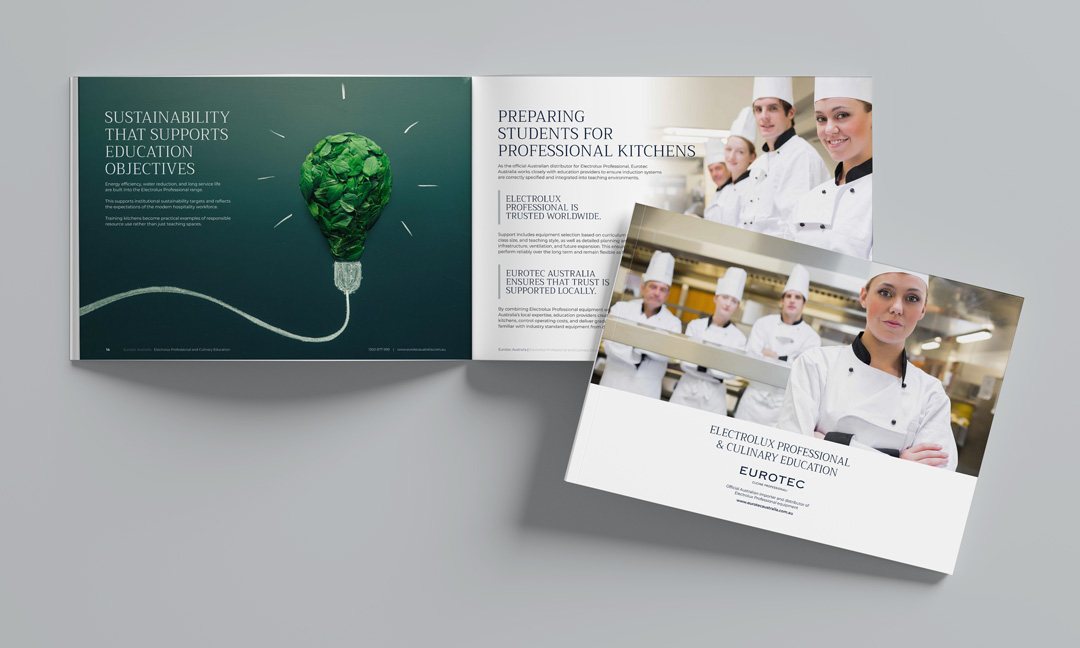
By integrating efficient equipment and thoughtful design, education providers can reduce environmental impact while maintaining professional standards. Electrolux Professional equipment, supported locally by Eurotec Australia, helps TAFEs and culinary colleges meet these expectations.
Why Sustainability Matters in Teaching Kitchens
Training kitchens operate for long hours and support repeated use across multiple classes. Without careful planning, this can result in high energy consumption, excessive water use, and unnecessary waste. Sustainable design allows education providers to manage operating costs while demonstrating responsible practices to students.
Teaching sustainability within a practical environment reinforces its importance. When students train using efficient equipment and systems, they develop habits that carry into professional kitchens and support long term industry change.
Reducing Water Use and Waste
Water efficiency is a critical consideration in training kitchens. High performance dishwashers with optimised wash cycles reduce water use while maintaining hygiene standards. Efficient warewashing ensures classes continue smoothly without excessive resource consumption.
Refrigeration also contributes to sustainability. Modern systems maintain consistent temperatures with reduced energy demand, supporting food safety while minimising waste. Together, these systems form a responsible approach to daily kitchen operation.
Designing for Long Term Efficiency
Sustainable kitchens are designed with longevity in mind. Durable equipment reduces replacement frequency, while modular layouts allow facilities to adapt as teaching requirements evolve. Planning for service access and maintenance ensures equipment continues to operate efficiently over its full lifespan.
Eurotec Australia works with education providers to design kitchens that balance immediate teaching needs with long term sustainability goals. This approach protects investment and supports responsible operation year after year.
Teaching Sustainability Through Practice
Training kitchens offer a unique opportunity to embed sustainability into everyday learning. Students observe first hand how efficient equipment performs in professional settings and how small operational decisions influence resource use.
Sustainable training kitchens help students understand how efficiency, responsibility, and performance work together in modern hospitality environments.
By aligning kitchen design with sustainable principles, education providers reinforce the importance of responsible practices and prepare students to meet modern industry expectations.
Sustainability in culinary education requires more than theory. It depends on practical environments that demonstrate efficiency, reliability, and professional standards. Electrolux Professional equipment, supported by Eurotec Australia, helps education providers create training kitchens that reflect the future of hospitality.
For guidance on sustainable kitchen design or to explore professional equipment solutions, contact Eurotec Australia or download the brochure for further information.