
How Electrolux Professional Responds to Changing Kitchen Needs
Professional kitchens do not stand still.
Menus change, service periods become more demanding, available space can be limited and operators are continually looking for practical ways to manage production without compromising the food they serve.
Commercial kitchen equipment therefore needs to keep pace with the environments in which it is used.
Looking across the Electrolux Professional portfolio, we can see equipment developed around many of these changing requirements, from modular cooking and advanced combi ovens through to high speed cooking solutions.
For us as the Australian distributor, this is one of the more interesting aspects of the range. Rather than looking at innovation simply as new technology, we see value in how different technologies and equipment formats address specific challenges within a professional kitchen.
Professional Kitchens Are Changing
There is no single model for a modern commercial kitchen.
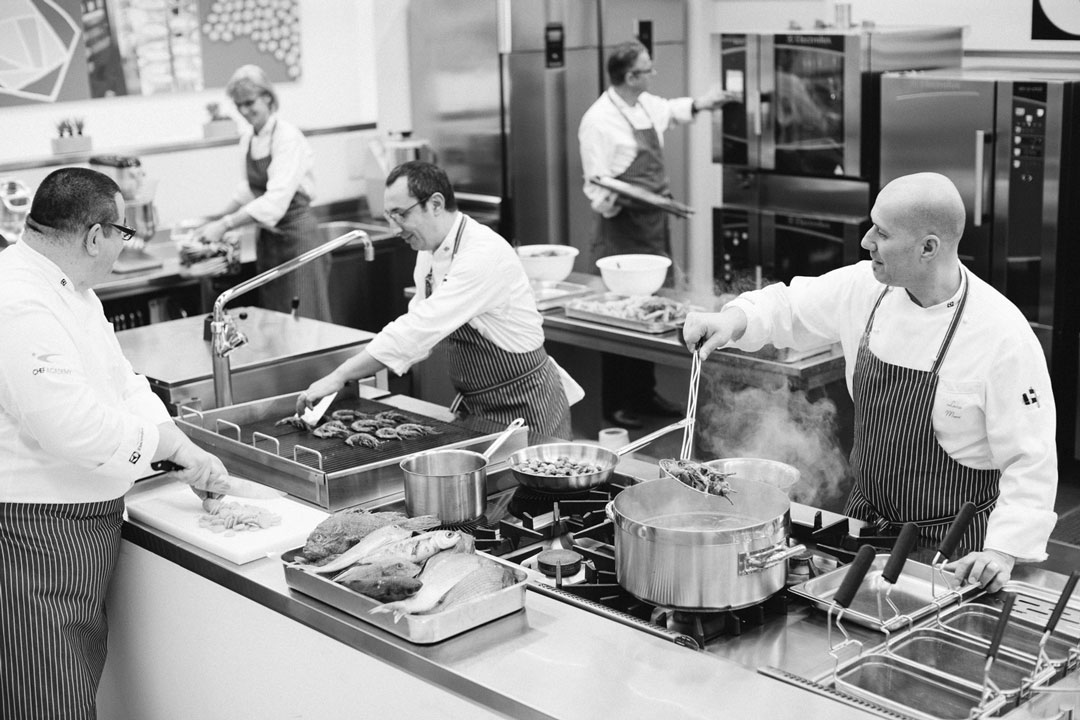
A restaurant may need flexibility around a changing menu. A café may need to produce food quickly within a compact footprint. A hotel kitchen may have to manage different types of service throughout the day, while healthcare and institutional kitchens can have their own production and operational requirements.
These changing requirements influence the way equipment is selected and configured.
Rather than simply looking for an appliance that performs one task, kitchen professionals can consider how the equipment fits into the wider workflow and what it needs to achieve during service.
From Fixed Equipment to More Flexible Solutions
Flexibility is one area where this changing approach can be seen across commercial kitchen equipment.
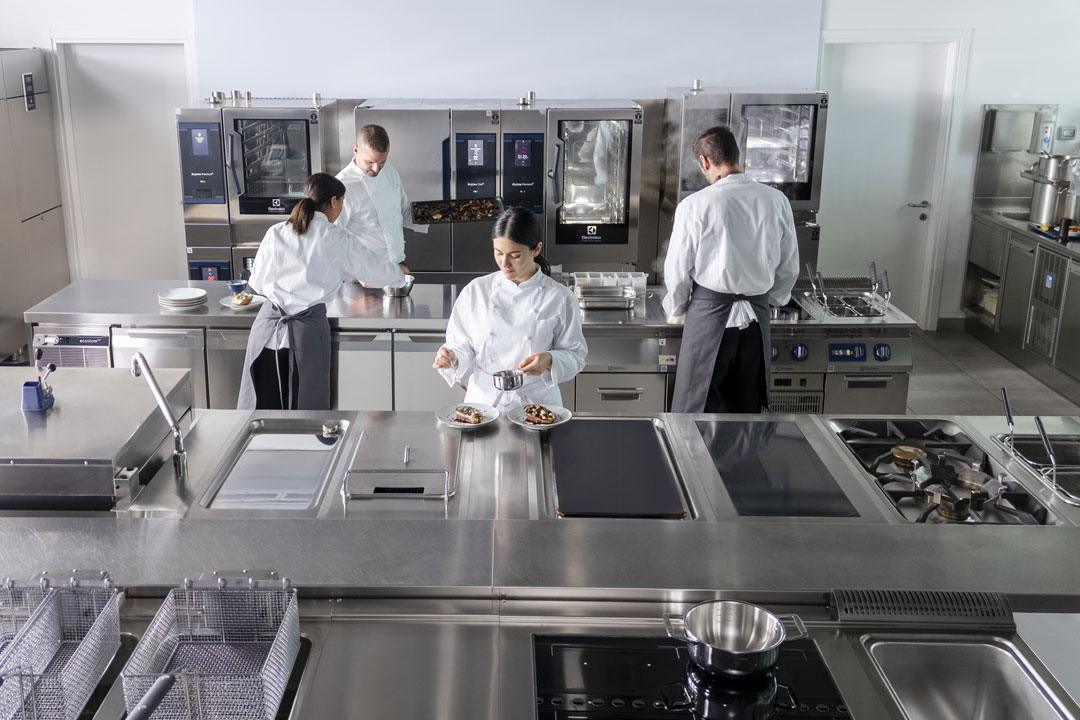
Modular cooking is a good example. The Electrolux Professional XP Series allows different cooking functions to be combined into configurations suited to different kitchen requirements. The current e-XP 700 and 900 ranges are available in two depths and can be configured across different types of professional operation.
The benefit of this approach is not simply having more equipment options. It allows the cooking line to be considered around the available space, cooking methods, production requirements and workflow of the individual kitchen.
The same principle can be seen elsewhere in the portfolio, where equipment is developed for different applications rather than expecting every kitchen to work in the same way.
This is particularly relevant as professional kitchens become more varied. A solution that works well for a full-service restaurant may not be the right approach for a café, quick-service operation or institutional kitchen.
Technology That Addresses Specific Demands
Technology can also play a role in responding to changing kitchen requirements, but its value comes from what it helps the operator achieve.
The SkyLine range, for example, incorporates technologies designed to manage variables such as humidity, airflow and food temperature. Lambda Sensor technology provides continuous measurement of humidity inside the cooking chamber, helping the oven manage cooking conditions with greater precision.
The important point is not simply that these technologies exist. It is how they address practical requirements around consistency, control and repeatability.
This is the approach we look for when assessing equipment. Technology should have a clear purpose within the cooking process and contribute something useful to the way a professional kitchen operates.
When Speed Becomes Part of the Kitchen Design
One of the clearest examples of changing foodservice requirements is the growing importance of speed.
For some businesses, the ability to prepare and serve food within a short service window is fundamental to the operation. This can be particularly relevant in cafés, quick-service restaurants, bars, food-to-go environments and other businesses where customers expect a fast turnaround.
Electrolux Professional's High Speed Cooking range brings together two different approaches to this requirement: SpeeDelight and GourmeXpress. The company positions both solutions around faster service, menu versatility and consistent cooking results.
SpeeDelight combines contact plates, infrared radiation and microwaves in a high speed cooking press designed for items such as sandwiches, wraps, toast and snacks. GourmeXpress combines convection, microwave and impingement cooking in a compact high speed oven, allowing a wider range of foods to be prepared quickly.
What makes these solutions interesting is not simply their speed. They represent a different way of approaching food production, particularly where available space, menu flexibility and service time all need to be considered together.
Adapting Without Losing Sight of the Kitchen
Technology and equipment formats will continue to change, but the kitchen remains the starting point.
The most useful developments are those that respond to a genuine operational requirement, whether that means configuring a cooking line around a particular space, controlling cooking conditions more precisely or preparing food within a shorter service window.
The most useful technology is not necessarily the most complicated. It is the technology that solves a real problem in the kitchen.
This is where we see the value in looking at the Electrolux Professional portfolio as a whole.
The equipment covers a wide range of applications, from cooking and food preparation through to refrigeration, warewashing and high speed cooking. Within those categories, different technologies and configurations provide options for different types of professional kitchen.
For dealers, consultants and kitchen professionals, that breadth can be useful when the challenge is not simply choosing equipment, but finding a practical combination of equipment for the way a particular kitchen needs to operate.
Looking at What Comes Next
Modern foodservice will continue to change.
Menus will evolve, customer expectations will shift and operators will continue to look for practical ways to manage speed, space, consistency and production.
Commercial kitchen equipment needs to respond to those changes without losing sight of the fundamentals of professional cooking.
From modular cooking to high speed solutions such as SpeeDelight and GourmeXpress, Electrolux Professional's current portfolio provides examples of how equipment can be developed around different operational requirements.
For us, that is one of the more useful ways to think about innovation in commercial kitchens. It is not simply about having newer technology. It is about having equipment that gives kitchen professionals practical options as the way they work continues to change.